Water Damage Restoration in Ashburn, VA
Water damage restoration is the complete process of returning a water-damaged home to its pre-loss condition: extracting the water, drying the structure to verified levels, cleaning and sanitizing, and repairing what the water ruined. One call in Ashburn starts all of it.
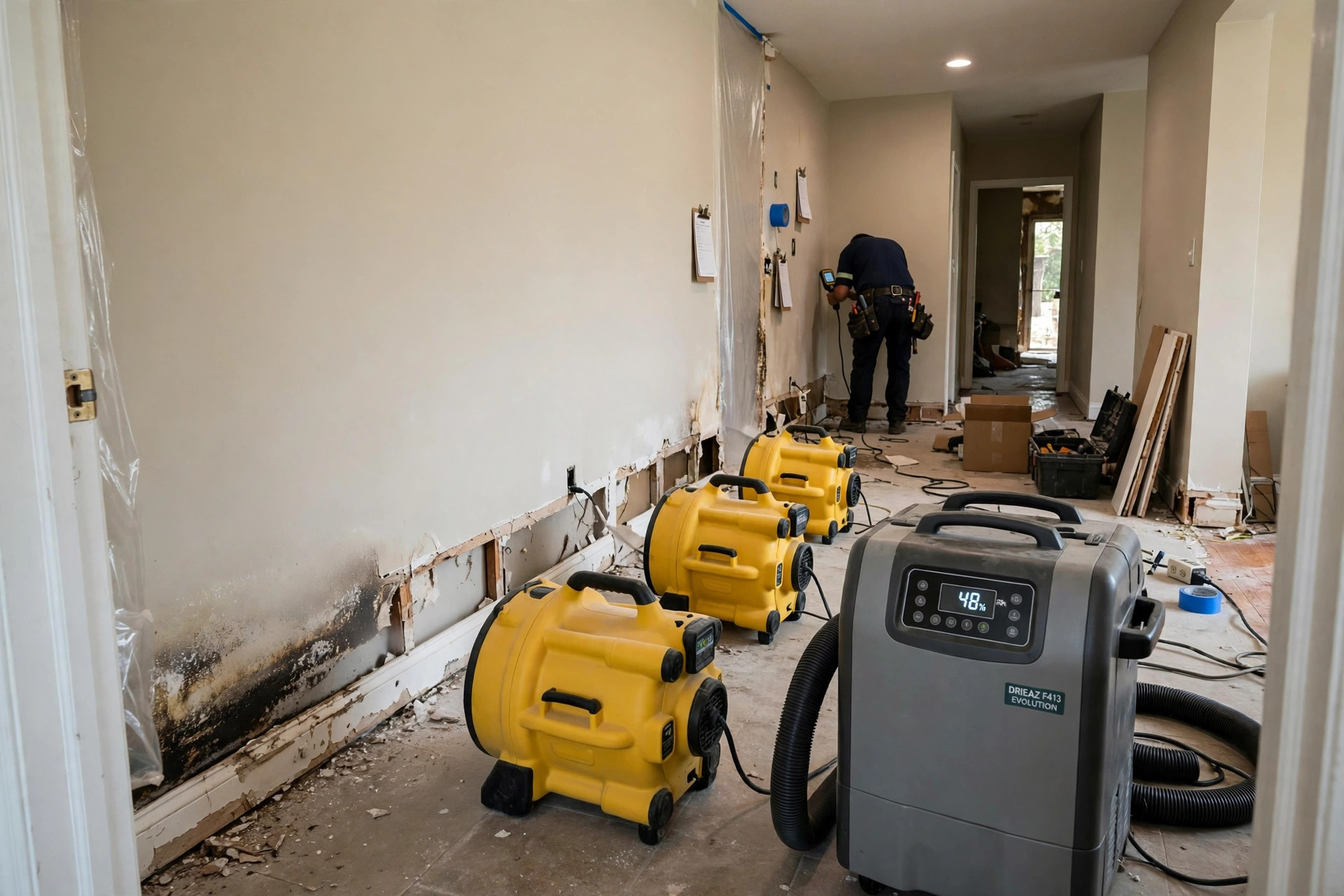
Restoration is more than mopping up. Water travels — through drywall, under flooring, into insulation and wall cavities — and damage continues for days after the visible water is gone. Professional restoration combines emergency extraction, moisture mapping, controlled structural drying, antimicrobial treatment and repair work into one managed process, documented from the first reading to the final walkthrough.
Whether the cause is a burst pipe in Broadlands, a failed water heater in Ashburn Farm or a flooded basement in Brambleton, the sequence is the same and the clock is the same: mold can begin growing on wet materials within 24–48 hours, so the value of restoration is measured in hours, not days.
When is water damage restoration needed?
- A pipe, appliance or water heater leaked or burst inside your home
- Water has soaked floors, walls, ceilings or a finished basement
- You can see buckling, staining, bubbling paint or a musty smell after a leak
- Your insurer has asked for professional mitigation before repairs
- A previous leak was 'dried' with fans but problems keep appearing
Our process
- Emergency call and source controlA coordinator answers 24/7, walks you through shutting off the water, and dispatches a crew. Finding and stopping the source is always step one.
- Inspection and moisture mappingTechnicians measure moisture in visible and hidden materials, photograph everything, and give you a written scope and price before work begins.
- Extraction and removalStanding water is extracted, and materials that cannot be dried in place — soaked padding, saturated drywall sections — are removed cleanly.
- Structural dryingAir movers and dehumidifiers are placed according to the moisture map and monitored daily until readings reach safe, dry standards.
- Cleaning, repair and documentationAffected areas are cleaned and treated with antimicrobials, repairs are completed, and you receive the full photo and readings file for your insurance claim.
Safety and standards
Crews follow IICRC-style water restoration standards: the water is categorized (clean, gray or contaminated) before work starts, because category decides protective equipment, what can be dried and what must be removed. Electrical hazards are checked before anyone works in standing water, and antimicrobial products are applied at label-specified rates — not sprayed and hoped for.
What to expect
Most Ashburn homes see extraction finished the day you call, drying completed in 3–5 days, and repairs scheduled right after. You can usually stay in the home unless the damage is severe; your coordinator will tell you plainly if a night or two away makes sense. Equipment is monitored daily, so someone checks your home every day of the drying process.
Cost factors
Cost depends on the area affected, the water category, and how much material must be removed and rebuilt. Small, contained jobs — a single room caught early — often run $500–$1,500; multi-room restoration commonly falls between $2,000 and $7,500. Our cost guide breaks the ranges down, and sudden accidental damage is covered by most homeowners policies.
Frequently asked questions
What is the difference between mitigation and restoration?
Mitigation is the emergency phase — extraction, drying, stopping the damage from spreading. Restoration is everything after: repairing and rebuilding what was damaged. We handle both under one scope, so you are not managing two companies.
Do I need to leave my home during restoration?
Usually not. Drying equipment is noisy but safe, and most families stay. If sewage is involved, or a large part of the home is affected, we may recommend a short stay elsewhere and will say so honestly.
Will restoration remove the musty smell?
Yes — the smell comes from moisture and microbial growth, and it leaves when materials are truly dry and treated. If an odor survives verified drying, it means a hidden wet area remains, and we keep looking until it is found.
Can you work directly with my insurance adjuster?
Yes. We share the moisture map, photos and scope with your adjuster and explain the technical side, so approvals move faster. The claim itself stays between you and your carrier.
What if the damage is from a slow leak over months?
Call anyway. Long-term leaks are often excluded from insurance, but the restoration process is the same, and stopping the damage now is far cheaper than the structural repairs that follow another season of leaking.
Related services
Emergency Water Removal
24/7 extraction of standing water from homes — the critical first step that limits how far damage spreads.
Basement Water Damage
Specialized drying and restoration for flooded basements, where water hides in walls, insulation and stored belongings.
Mold Remediation
Inspection, containment and removal of mold growth after water damage, with the moisture source fixed first.
Water damage gets worse by the hour
One call starts the process. A restoration coordinator will explain the next steps, answer questions about cost and insurance, and dispatch a crew anywhere in Ashburn, day or night.
Call (703) 555-0147 — 24/7