What to Do in the First 24 Hours After Water Damage
The first 24 hours after water damage decide most of the final bill — and whether mold becomes part of the story. This guide puts the steps in the right order, including the ones people usually get backwards.
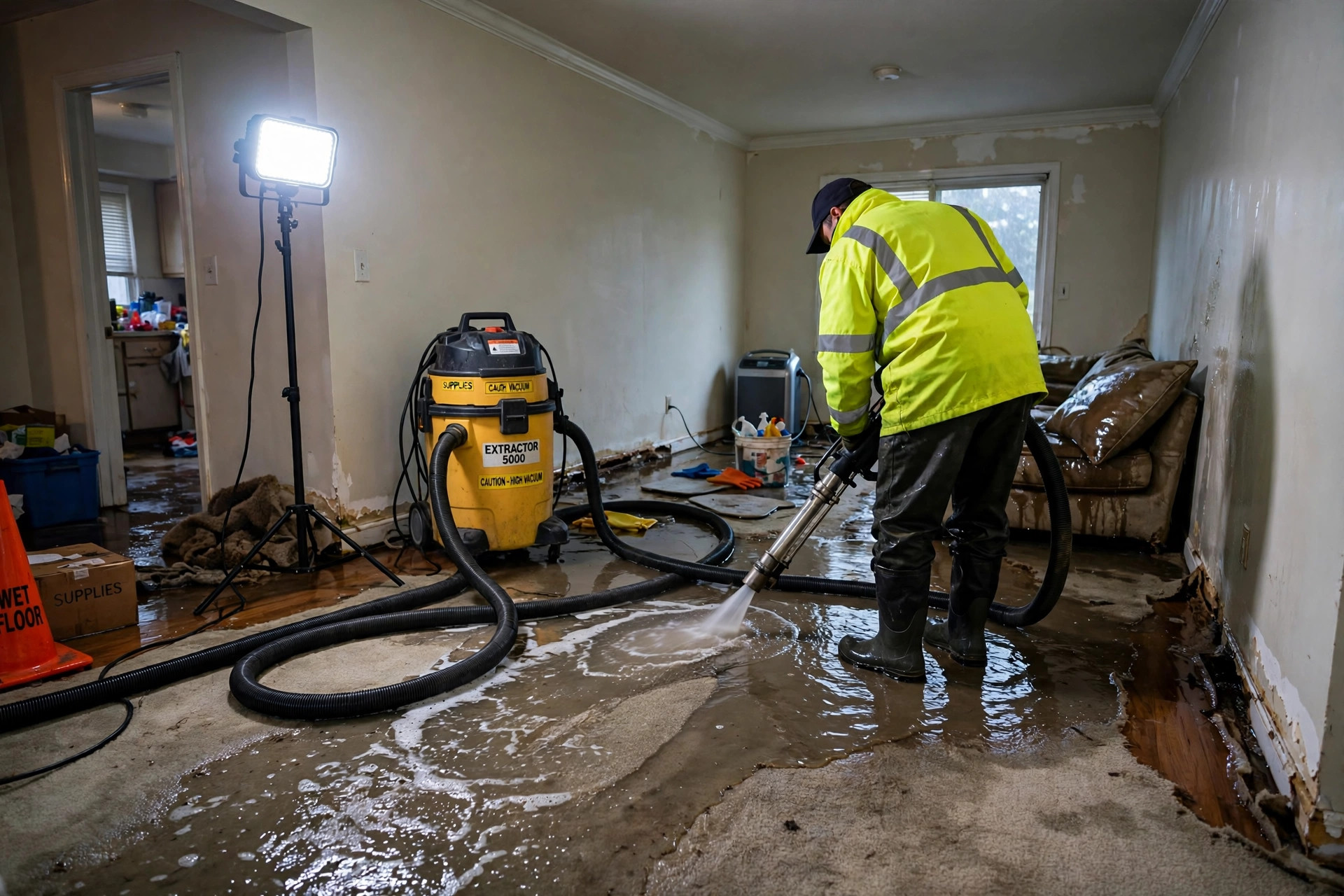
Hour 0: Make it safe, then stop the water
Safety comes before property. If water is near outlets, appliances or your electrical panel, stay out of it and switch off the affected circuits at the breaker if you can reach it with dry hands and dry footing. Then stop the source: the fixture valve for a toilet or sink, or the main shutoff — in most Ashburn homes it is in the basement or utility room where the water line enters. If the source is a failed water heater or washing machine, its own valve or the main both work.
If you cannot find or turn the valve, say so on your first call — a coordinator can talk you through the common locations while a crew is on the way.
Hour 0–1: Call for help — restoration first, insurance second
Call a restoration company as soon as the water is stopped (or while someone else stops it). Extraction and drying are time-critical in a way paperwork is not: every hour of delay lets water climb walls and settle into subfloor. In Ashburn, we answer 24/7 at (703) 555-0147.
Insurance comes next, and it does not need to be first: policies expect you to mitigate — to stop the damage from growing — and professional mitigation started immediately is exactly what adjusters want to see. Open the claim the same day, but do not wait on hold with a carrier while your floors soak.
Hour 1–2: Photograph everything, then rescue belongings
Before moving anything, take wide and close photos of every affected room: the source, the water line on walls, damaged flooring, and belongings in the water. Video works too. These early images are the strongest evidence a claim ever gets, and they take five minutes.
Then rescue in order: documents, electronics, medications, sentimental items, then furniture. Move what you can to a dry room or raise it on blocks or foil-wrapped wood. Do not throw damaged items away yet — photograph them in place and let the adjuster process release them.
Hours 2–6: Extraction and the drying setup
This is the professional phase: standing water is extracted, moisture is mapped in floors and wall cavities, and drying equipment is placed according to the map. Materials that cannot be dried in place — soaked carpet pad is the classic — come out now, because leaving them slows everything else.
Your part during this phase is small: keep the equipment running (do not unplug air movers to charge a phone), keep room doors open or closed as the crew directs for airflow, and note the daily monitoring visits on your calendar.
Hours 6–24: The decisions that prevent week-two surprises
Three things matter before the first day ends. First, confirm the moisture readings in writing — what was wet, and what the drying targets are. Second, if the kitchen or only bathroom is affected, decide early about staying elsewhere; loss-of-use coverage is easier arranged on day one than day four. Third, protect the rooms that stayed dry: water vapor migrates, so keep interior doors managed as directed and run the HVAC as the crew advises.
What not to do in the first 24 hours: do not apply bleach to large areas (it does not prevent mold in porous materials), do not seal wet walls with paint, and do not sign a repair contract in the driveway. Mitigation first; repairs are quoted calmly, from a written scope, once drying targets are known.
Frequently asked questions
Should I call my insurance company before the restoration crew?
No — mitigation first. Policies require you to prevent further damage, and extraction started immediately is the clearest proof of it. Open the claim the same day, after the emergency call is made.
Can I use my own fans and a dehumidifier instead?
For a few gallons on a hard floor, yes. For anything soaked into carpet, wood, drywall or a basement, household equipment cannot reach cavity moisture — and unverified drying is how mold claims are born. The meter check on a professional visit settles the question honestly.
What if I discover the damage days later?
Start the same sequence now. The clock started without you, which makes professional drying and a mold check more important, not less — and document the discovery date for your insurer.
Is it safe to stay in the house the first night?
Usually, if the water was clean, power hazards are isolated and at least one bathroom works. Sewage involvement, a soaked electrical system or a heavily affected sleeping area changes the answer — your coordinator will tell you plainly.
Water damage gets worse by the hour
One call starts the process. A restoration coordinator will explain the next steps, answer questions about cost and insurance, and dispatch a crew anywhere in Ashburn, day or night.
Call (703) 555-0147 — 24/7