Mold Remediation in Ashburn, VA
Mold is never just a cleaning problem — it is a moisture problem with a visible symptom. Our mold remediation removes the growth safely, under containment, and corrects the moisture that caused it, so it does not return.
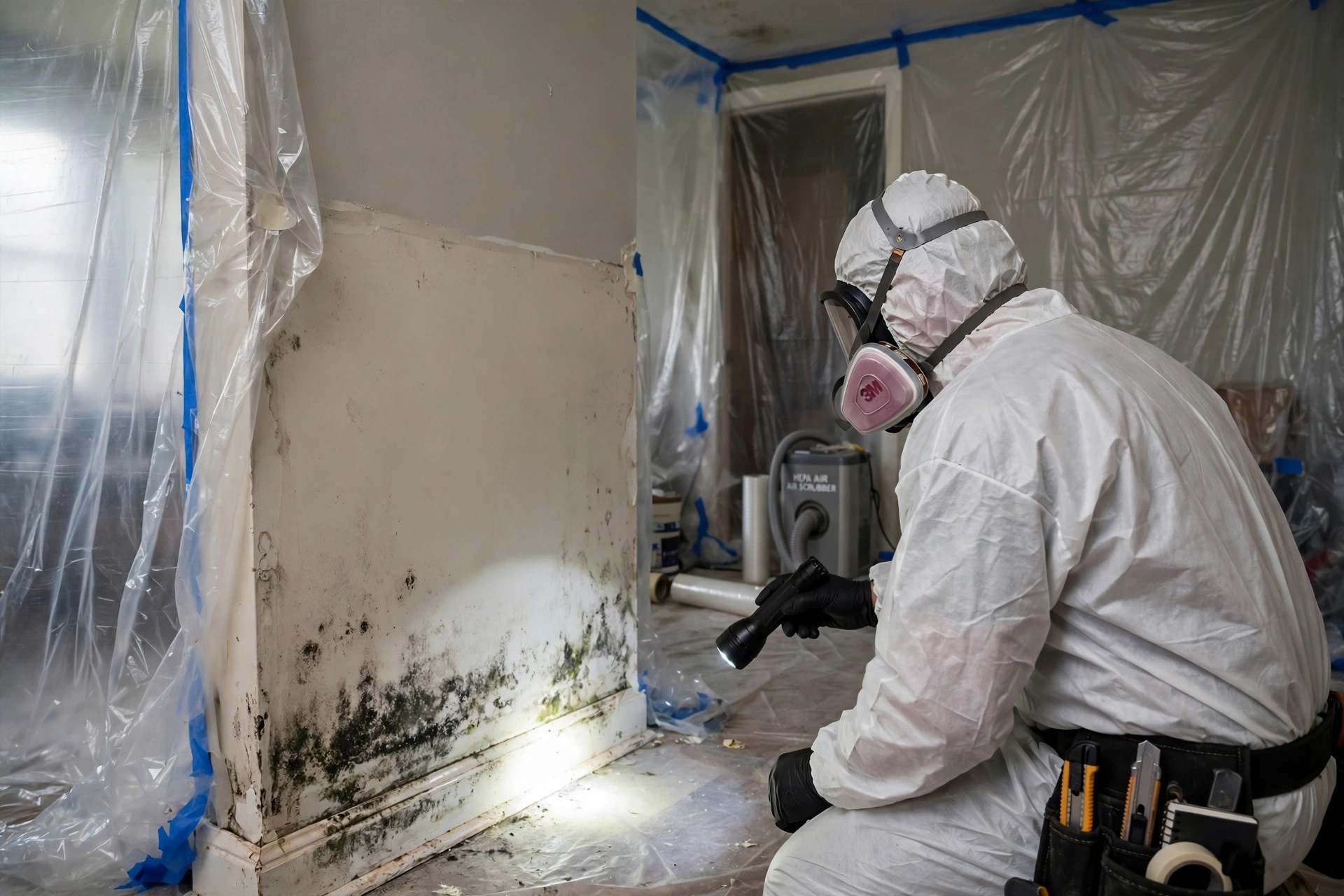
Mold remediation follows a strict order: find and fix the moisture source, contain the work area so spores are not spread through the home, remove mold-damaged porous materials, HEPA-clean and treat remaining surfaces, and verify the area is dry before rebuilding. Skipping the first or last step is why DIY mold jobs so often 'come back' — the mold was removed, but the conditions that grew it were left in place.
In Ashburn homes, mold most often follows water events that were dried incompletely: a basement leak, a slow plumbing drip inside a wall, a bathroom exhaust problem, or a past flood dried with household fans. If you can smell mustiness but see nothing, the growth is usually inside a wall cavity or under flooring — exactly what our moisture and inspection process is built to find.
When is mold remediation needed?
- You can see mold growth on walls, ceilings, or around windows and vents
- A musty smell persists in a basement, bathroom or after a leak
- Water damage happened weeks or months ago and was never professionally dried
- A home inspection or air test flagged mold before a sale
- Family members notice allergy-like symptoms that ease away from home
Our process
- Inspection and moisture diagnosisWe locate the growth and, more importantly, its moisture source, using meters and inspection access where needed. You get a written scope before any work.
- Containment and air controlThe work area is sealed and placed under negative air with HEPA filtration, so removal does not spread spores to clean rooms.
- Removal of damaged materialsMold-damaged drywall, insulation and other porous materials are removed and bagged inside containment; salvageable structure is HEPA-cleaned and treated.
- Cleaning and antimicrobial treatmentRemaining surfaces are cleaned and treated, and the whole contained area is HEPA-vacuumed as the final pass.
- Dry verification and rebuildMoisture readings must reach safe levels before closing walls. Then repairs proceed — with the source fixed, so the mold stays gone.
Safety and standards
Remediation crews work in protective equipment inside containment, and the negative-air setup protects the rest of your household during the job. We do not use 'fogging-only' treatments or bleach-and-paint shortcuts: dead mold left in place still holds allergens, and painted-over mold telegraphs through within a season. Removal and moisture correction are the standard we work to.
What to expect
A contained bathroom or small-area job can finish in a day or two; basement or multi-room remediation typically runs 3–5 days plus rebuild time. Virginia does not license mold remediation as a separate trade, which makes the written scope, containment method and dry verification in your quote the things to compare between companies — ask any company you call, including us, exactly how they contain and verify.
Cost factors
Small, contained areas — a bathroom wall section, for example — often run $500–$1,500. Larger remediation with containment and rebuild commonly runs $1,500–$6,000. The moisture-source repair (a plumbing fix, a drainage correction) is sometimes separate. Insurance coverage for mold is limited in most policies and often tied to a covered water event; our documentation states the source and timeline clearly either way. See the cost guide for context.
Frequently asked questions
Is the mold in my home dangerous?
Any indoor mold growth is a problem worth removing: it damages materials and can aggravate allergies and asthma, particularly in children and anyone with respiratory conditions. We do not perform medical assessments, but we treat every growth as worth removing properly, and large or HVAC-involved growth deserves particular care.
Can't I just spray bleach on it?
On a tiny area of hard, non-porous surface, household cleaning can be reasonable. On drywall, wood or anything larger than a few square feet, bleach does not reach the roots in porous material, adds moisture, and leaves the source untouched — the growth returns. That is the honest line between a chore and a remediation job.
Do I need a mold test?
Usually the inspection matters more than a test: visible growth needs removal regardless of species, and the moisture source needs finding either way. Testing can help in real-estate transactions or when growth is suspected but hidden — we will tell you if your situation is one of those.
Will mold come back after remediation?
Not if the moisture source is corrected and the area is verified dry before closing — which is why both are built into our scope. Mold needs moisture; remove the moisture and the remediation holds.
How fast does mold grow after a leak?
On wet drywall and wood, growth can begin within 24–48 hours — the reason every water service we offer treats drying speed as the priority. Read our guide on mold after water damage for the full picture.
Related services
Water Damage Restoration
Complete restoration after leaks, floods and pipe failures: extraction, structural drying, repairs and documentation for insurance.
Basement Water Damage
Specialized drying and restoration for flooded basements, where water hides in walls, insulation and stored belongings.
Flood Cleanup
Cleanup after flooding from storms, overflowing appliances and sump failures, including debris removal and sanitizing.
Water damage gets worse by the hour
One call starts the process. A restoration coordinator will explain the next steps, answer questions about cost and insurance, and dispatch a crew anywhere in Ashburn, day or night.
Call (703) 555-0147 — 24/7