Fire Damage Restoration in Ashburn, VA
After the fire department leaves, a second kind of damage remains: soot on everything, smoke odor in every fabric, and water standing where hoses ran. Fire damage restoration cleans, deodorizes and restores it all — as one job, not three.
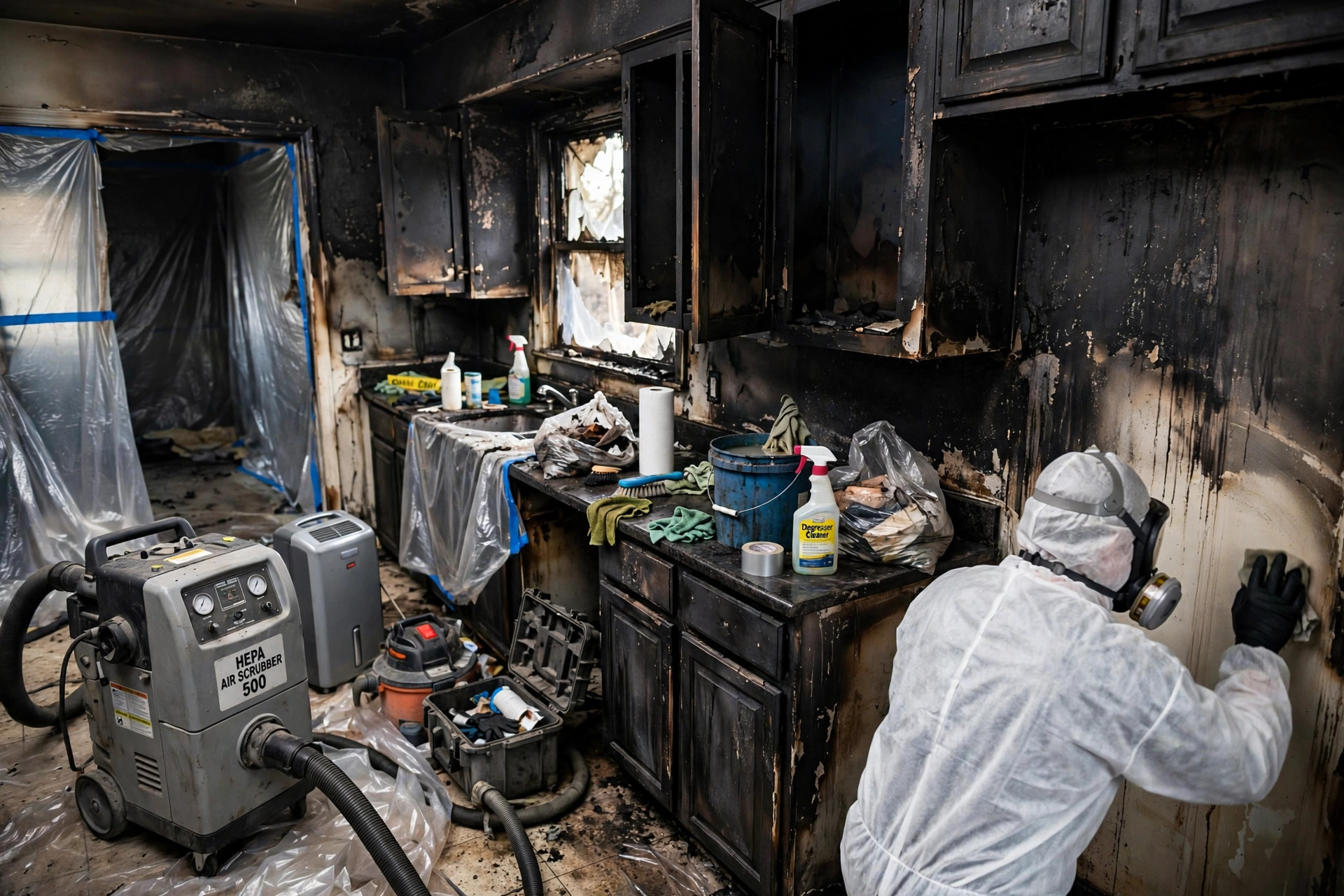
Fire damages a home three ways at once. Heat and flame destroy directly. Smoke and soot travel far beyond the burn area, coating walls, contents and HVAC systems with acidic residue that keeps damaging surfaces for days. And the water used to fight the fire soaks floors, walls and belongings, starting the same mold clock as any flood. Professional fire restoration sequences all three: secure the property, remove debris, clean soot with the right chemistry for each surface, extract and dry the water, and neutralize odor at its source.
Because fire losses are insured events with adjusters involved from day one, documentation discipline matters as much as cleaning skill — every step here is photographed and itemized.
When is fire damage restoration needed?
- A kitchen, electrical or chimney fire damaged one or more rooms
- Smoke and soot spread through the home beyond the fire itself
- Firefighting water soaked floors, walls or the level below
- A smoke odor persists after a small fire was put out
- Your insurer has asked for a professional restoration scope
Our process
- Safety, security and surveyOnce the fire department releases the property, we survey structural safety, document every affected room, and identify what can be cleaned versus what must be replaced.
- Debris and water removalBurned debris is removed, and standing firefighting water is extracted so drying can begin — the water clock does not wait for the fire paperwork.
- Soot and smoke cleaningSurfaces are cleaned with methods matched to the soot type — dry, oily or protein-based — including walls, ceilings, contents and HVAC registers.
- Odor neutralizationOdor is treated at its source with professional deodorizing processes after cleaning; fragrance masking is never the plan.
- Restoration and claim documentationRepairs and repainting follow cleaning, and you receive the complete itemized file your adjuster works from.
Safety and standards
Burned structures can hide weakened framing, damaged wiring and contaminated residue, including from burned plastics and electronics. Nobody re-enters until the fire department releases the scene, and our crews treat electrical and air quality as live questions until they are answered. Ash and soot are handled as contaminated material throughout.
What to expect
A contained kitchen fire's cleaning and deodorizing may take under a week; multi-room losses run several weeks including repairs. You will likely need to stay elsewhere during heavy cleaning — your insurer's 'loss of use' coverage usually applies, and our coordinator can explain how families typically handle the sequence.
Cost factors
Fire restoration is the widest-ranging work we do: smoke-only cleaning for a few rooms may run $2,500–$6,000, while multi-room fire, soot and water restoration commonly runs $6,000–$25,000 or more depending on structural repair. Fire is a covered peril in standard homeowners policies; the itemized scope is how the claim gets paid correctly. Water-side ranges are in our cost guide.
Frequently asked questions
Can smoke odor really be removed completely?
In the great majority of cases, yes — when the soot source is fully cleaned and porous odor reservoirs (carpet pad, insulation, upholstered items that absorbed smoke) are removed or sealed as needed. Odor that 'comes back' almost always traces to a source that was cleaned around, not cleaned.
Should I try cleaning soot myself first?
Please do not. Wiping dry soot with the wrong method smears it permanently into paint and surfaces, and adjusters prefer the scene documented before disturbance. Photograph everything, ventilate if safe, and let the first cleaning be the right one.
What happens to my belongings?
Contents are inventoried and sorted: cleanable items are cleaned and deodorized, electronics are referred for specialized cleaning, and unsalvageable items are documented for the claim before disposal. Nothing sentimental is discarded without your direction.
Is the water from firefighting really a separate problem?
It behaves exactly like a flood: it soaks structure, and mold follows in 24–48 hours. That is why extraction and drying start in the first visit, in parallel with fire cleanup planning.
How does payment work on a fire claim?
Typically the insurer issues payment against the approved scope, sometimes jointly with a mortgage company on larger losses. We work from the adjuster's approved scope and document any hidden damage found during cleaning for supplements.
Related services
Water Damage Restoration
Complete restoration after leaks, floods and pipe failures: extraction, structural drying, repairs and documentation for insurance.
Mold Remediation
Inspection, containment and removal of mold growth after water damage, with the moisture source fixed first.
Storm Damage Restoration
Recovery after Virginia storms: roof leaks, wind-driven rain, flooding and the water damage that follows.
Water damage gets worse by the hour
One call starts the process. A restoration coordinator will explain the next steps, answer questions about cost and insurance, and dispatch a crew anywhere in Ashburn, day or night.
Call (703) 555-0147 — 24/7