How Long Does Water Damage Restoration Take?
The honest answer is 'it depends' — but it depends on knowable things. This guide breaks restoration into its three phases with real timelines for each, and names the factors that make a job fast or slow.
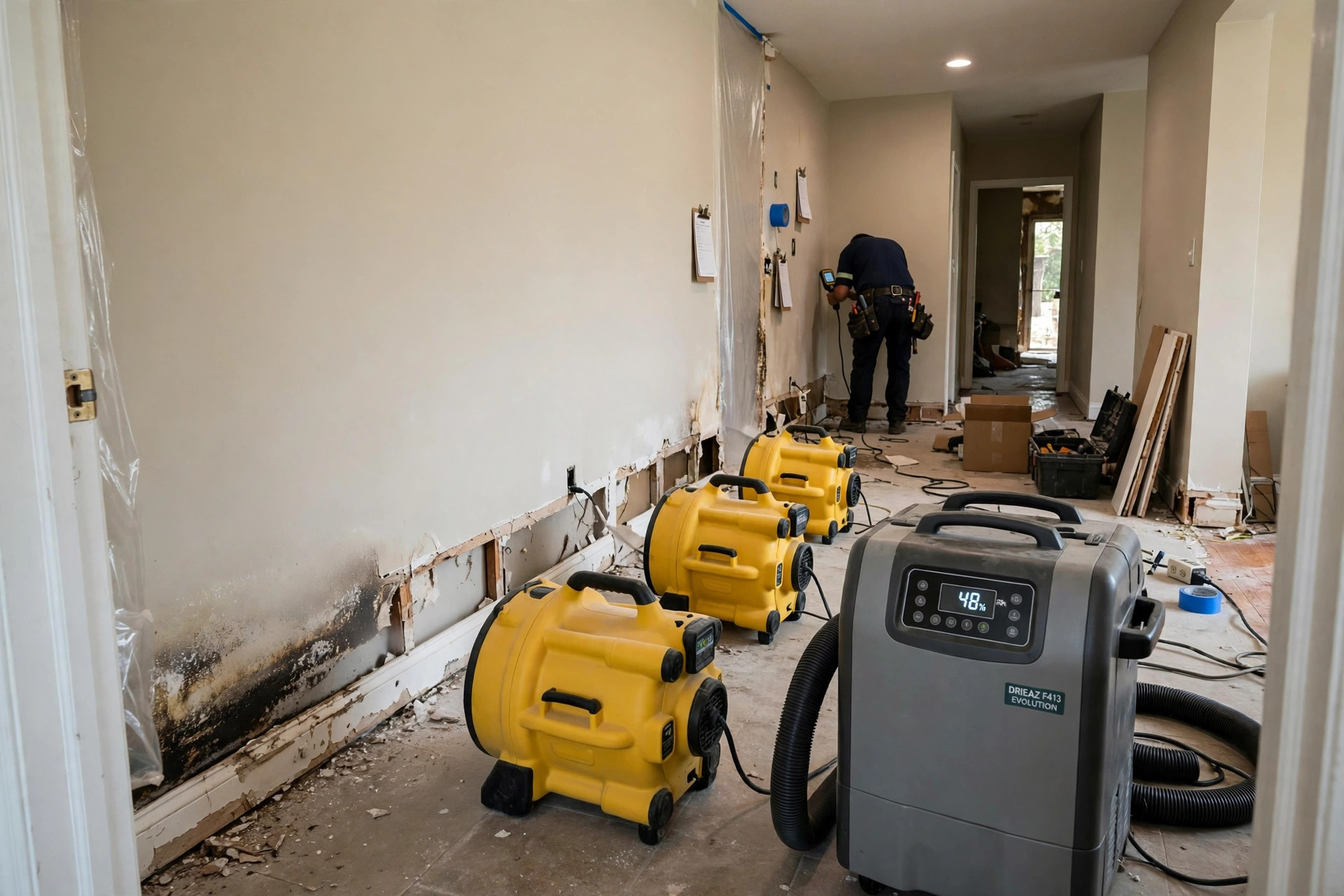
Phase 1: Emergency mitigation — hours to one day
Mitigation is the stop-the-bleeding phase: source control, extraction, removal of materials that cannot dry in place, and drying equipment set up. For a typical one-to-three-room event, this is done the day you call, in a single visit of two to six hours. A flooded basement or a multi-level pipe loss can take a full day. Nothing about this phase should wait for insurance approval — carriers expect it to happen immediately, and its documentation is what the rest of the claim is built on.
Phase 2: Structural drying — usually 3 to 5 days
Drying is the phase homeowners underestimate. Air movers and dehumidifiers run continuously while technicians visit daily to take moisture readings and adjust placement. Clean water on resilient materials in warm weather: often three days. Hardwood floors, wall cavities and finished basements: four to five days is normal, and dense materials — plaster, concrete, tile over mortar — can run a week.
The endpoint is not a date; it is a number. Equipment is removed when materials reach their dry standard, verified by meter. A company that promises a fixed drying time before measuring is guessing with your walls.
Phase 3: Repairs — days to a few weeks
Repairs begin where drying ends: replacing the drywall sections that were opened, reinstalling baseboards, flooring repairs or replacement, and painting. Small scopes finish in two to five working days. Larger ones — matching hardwood across a level, replacing cabinets, rebuilding a finished basement — run two to four weeks, driven less by labor than by material lead times and scheduling.
If insurance is involved, add the adjuster's scope approval between phases 2 and 3. A complete documentation package — photos, readings, itemized scope — is the difference between approval in days and a negotiation in weeks.
What makes a job faster
Calling within the first hours, before water migrates. A single affected area with resilient materials. Warm, dry weather that helps dehumidification. Clear access to the space and belongings moved early. And decisions made promptly — flooring and paint choices are the most common self-inflicted delay in the repair phase.
What makes a job slower
Delayed discovery is the big one: a leak found after a vacation means deeper penetration, possible mold remediation before drying can even finish, and more demolition. Contaminated water adds removal and sanitizing steps. Multi-unit buildings add coordination with neighbors and HOAs. None of these make a job impossible — they make the honest timeline longer, and a good coordinator will show you which factor is driving yours.
The summary to hold onto: extraction in hours, drying in days, repairs in weeks — and the first call is the only deadline that is truly yours. In Ashburn, that call is (703) 555-0147, answered around the clock.
Frequently asked questions
Can drying really not be rushed with more equipment?
Up to a point, more equipment helps — but materials release moisture at their own rate, and over-aggressive heat can damage hardwood and finishes. Daily readings, not equipment count, decide when a structure is dry.
Why did my neighbor's similar leak finish in half the time?
Usually the discovery time. A leak caught in an hour and one found after a weekend look identical from the doorway and are completely different inside the wall. Materials matter too — tile over concrete dries far faster than hardwood over plywood.
Do I have to wait for the adjuster before repairs start?
Mitigation and drying: no, start immediately. Repairs: the scope is usually approved first. Emergency measures you take to protect the property are expected and documented for reimbursement.
How will I know the drying is actually done?
Ask for the readings. Your final documentation should show moisture levels at or below the dry standard for each material — that record is also your protection if a question arises later.
Water damage gets worse by the hour
One call starts the process. A restoration coordinator will explain the next steps, answer questions about cost and insurance, and dispatch a crew anywhere in Ashburn, day or night.
Call (703) 555-0147 — 24/7