Flood Cleanup in Ashburn, VA
After a flood, your home holds more than water — it holds mud, debris and contaminants that rode in with it. Our flood cleanup removes all of it, sanitizes the structure and dries it to verified levels, anywhere in Ashburn.
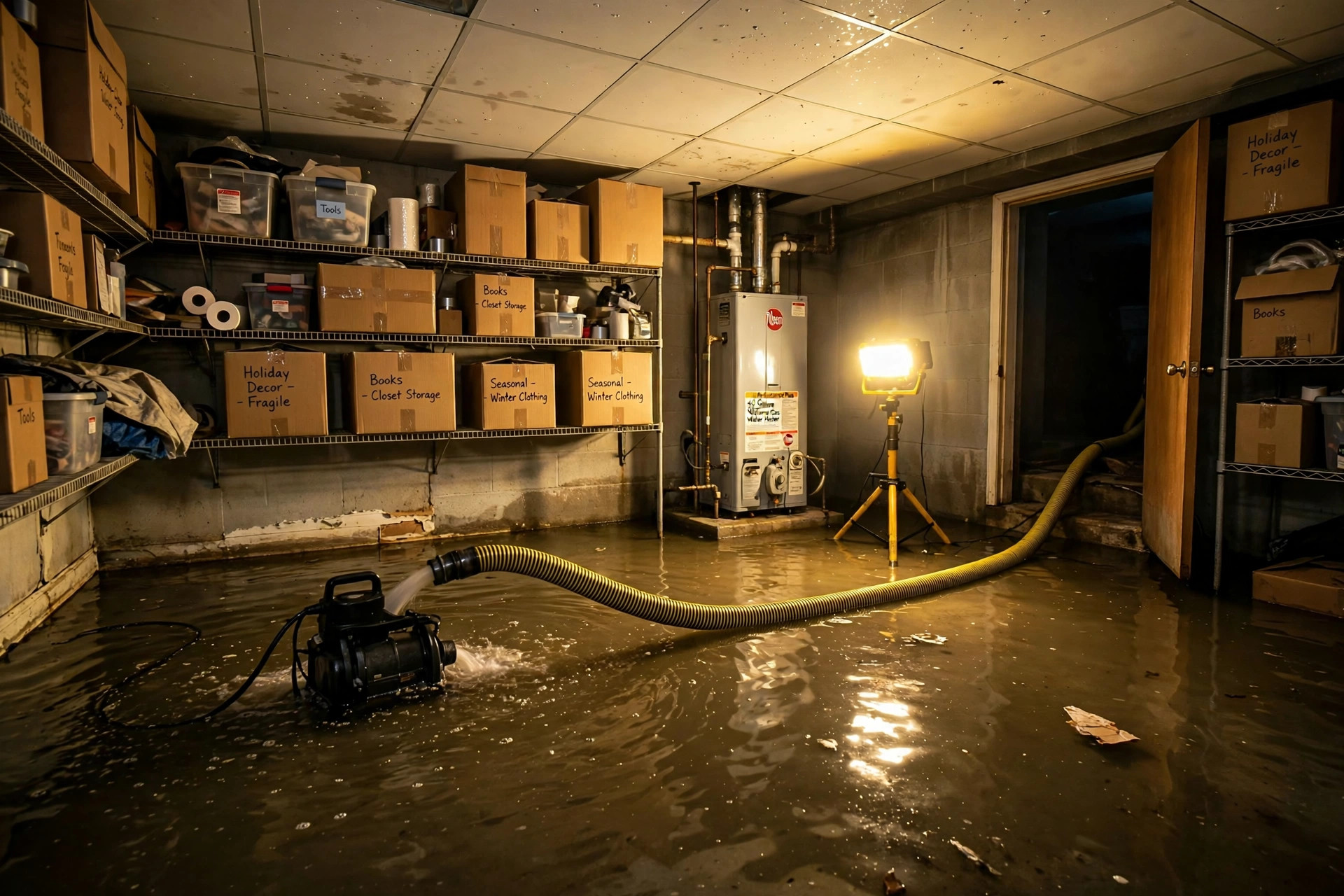
Flood cleanup covers water that enters from outside or overwhelms a home's defenses: storm flooding, a failed sump pump during heavy rain, an overflowing creek line, or a major internal failure that behaves like a flood. Because outside water is treated as contaminated (Category 3), flood cleanup goes further than a clean-water job: debris and silt removal, disposal of soaked porous materials, pressure washing and sanitizing of hard surfaces, then structural drying.
Ashburn's streams and storm ponds do their job in most storms — but the homes near them in Broadlands, along Goose Creek and in low-lying parts of older neighborhoods learn quickly which storms are the exception.
When is flood cleanup needed?
- Storm water entered your home through doors, window wells or the foundation
- A sump pump failed during heavy rain and the basement filled
- A creek, pond or drainage area overflowed into your property
- Mud, silt or debris was left behind after water receded
- A major internal failure flooded multiple rooms at once
Our process
- Safety and damage surveyPower, gas and structural safety are checked first. Then the crew maps how far water reached — including inside wall cavities — and photographs everything for your records.
- Water and debris removalStanding water is pumped out, and mud, silt and ruined materials are removed. Porous materials that flood water touched — carpet, pad, insulation, lower drywall — are taken out, not dried in place.
- Washdown and sanitizingHard surfaces are cleaned and sanitized to remove the contaminants flood water carries, including bacteria from soil and drainage systems.
- Structural dryingFraming, subfloor and remaining structure are dried with air movers and dehumidifiers, monitored daily against moisture targets.
- Repair scope and documentationYou receive a clear repair list — drywall, flooring, paint — and the full documentation package, whether your claim goes to homeowners insurance or a flood policy.
Safety and standards
Flood water is handled as contaminated on every job: protective equipment for the crew, containment so debris and residue are not spread, and licensed disposal of removed materials. If there is any sign the water carried sewage or chemicals, the sanitizing protocol is escalated and we tell you exactly why.
What to expect
Cleanup of a flooded basement or ground floor typically runs 2–5 days including drying; repairs follow. Flood events are the jobs where documentation matters most — flood insurance and homeowners insurance draw a sharp line between 'water from outside' and 'water from inside,' and our photos and source notes help your claim land on the right side of it.
Cost factors
Flood cleanup for a basement or ground floor commonly runs $1,500–$5,000, driven by depth, area and how much material must be removed. Whole-home flooding costs more. The cost guide explains the factors; for coverage, flood damage usually requires an NFIP or private flood policy, while sump failures are often covered by a water-backup endorsement.
Frequently asked questions
Is flood cleanup covered by homeowners insurance?
Usually not — standard homeowners policies exclude flooding from outside. Flood policies (NFIP or private) cover it, and sump-pump failures are often covered by an inexpensive water-backup endorsement. Our documentation states the water source clearly, which is what both kinds of claims turn on.
Why must flooded drywall and carpet be removed instead of dried?
Because flood water carries soil bacteria and contaminants into porous materials where they cannot be reliably sanitized. Drying them in place would leave the contamination — and the odor — inside your walls.
Can I stay in the house during flood cleanup?
Often yes, if upper floors are unaffected and utilities are safe. If the HVAC system pulled in flood air or the only bathrooms are affected, a short stay elsewhere may be wiser — we will tell you plainly.
What should I save or throw away after a flood?
When in doubt, photograph it and ask us before discarding — insurers want records. Food, medicine and anything porous that sat in flood water should go; hard goods can usually be cleaned and sanitized.
How soon after a storm should I call?
As soon as it is safe to enter. Every day of delay lets moisture move deeper and mold take hold; the first 48 hours shape the whole cost of the job.
Related services
Emergency Water Removal
24/7 extraction of standing water from homes — the critical first step that limits how far damage spreads.
Basement Water Damage
Specialized drying and restoration for flooded basements, where water hides in walls, insulation and stored belongings.
Storm Damage Restoration
Recovery after Virginia storms: roof leaks, wind-driven rain, flooding and the water damage that follows.
Water damage gets worse by the hour
One call starts the process. A restoration coordinator will explain the next steps, answer questions about cost and insurance, and dispatch a crew anywhere in Ashburn, day or night.
Call (703) 555-0147 — 24/7